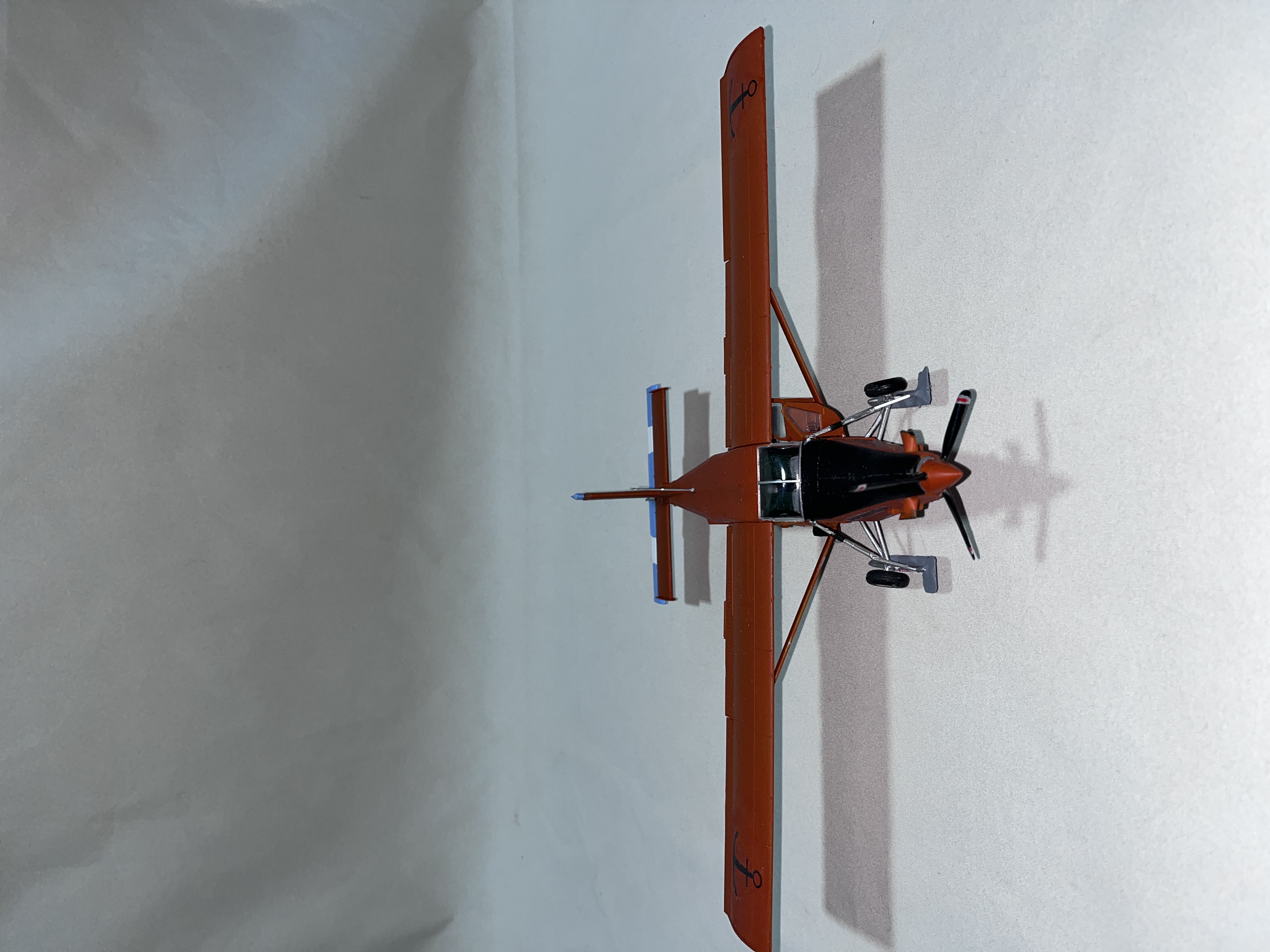
The de Havilland Canada DHC-2 Beaver was one of the first light aircraft to operate systematically in the Argentine Antarctic. Designed to take off and land on short runways, snow, or ice using skis, it proved crucial for reconnaissance, liaison, and the deployment of scientific personnel. Its crews, comprised of highly experienced Argentine Air Force pilots specializing in polar flight, carried out missions that connected isolated bases and allowed for the exploration of areas difficult to access by land. The Beaver performed light cargo transport, medical evacuations, and aerial photography. It operated primarily in regions near the eastern sector of the continent and in icy maritime areas. Its maneuverability enabled the establishment of initial air routes. It represents the true beginning of Argentine Antarctic utility flights.
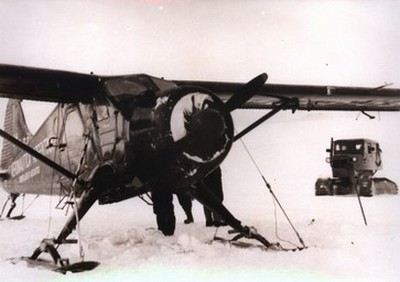
Notable Missions
Operation “Marambio” (1969)
On September 25, 1969, the Beaver aircraft, registration P-03, made the first wheeled landing on Antarctic soil during the initial construction phase of the runway for the future Marambio Base. This flight demonstrated the feasibility of using consolidated dirt runways in Antarctica.
Operation South: Arrival at the South Pole (1965)
Two Beaver aircraft (P-05 and P-06) formed part of the First Argentine Air Squadron to the South Pole, carrying out reconnaissance, route scouting, and logistical support missions on the polar plateau during the historic Argentine transantarctic flight.