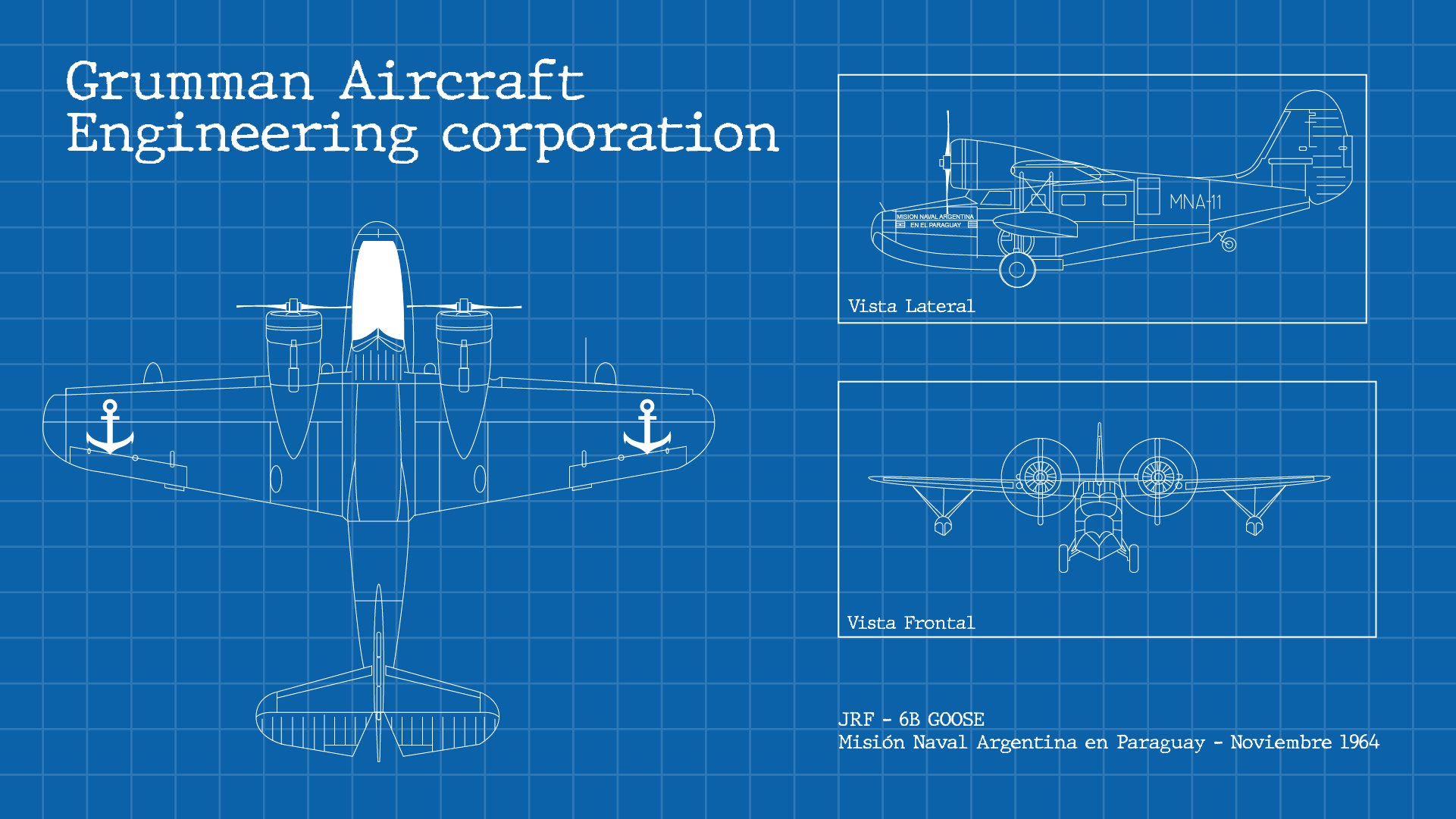
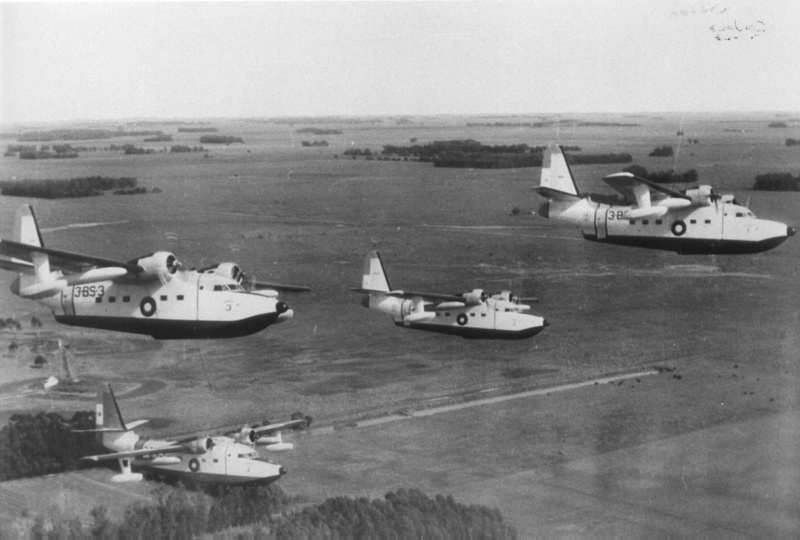
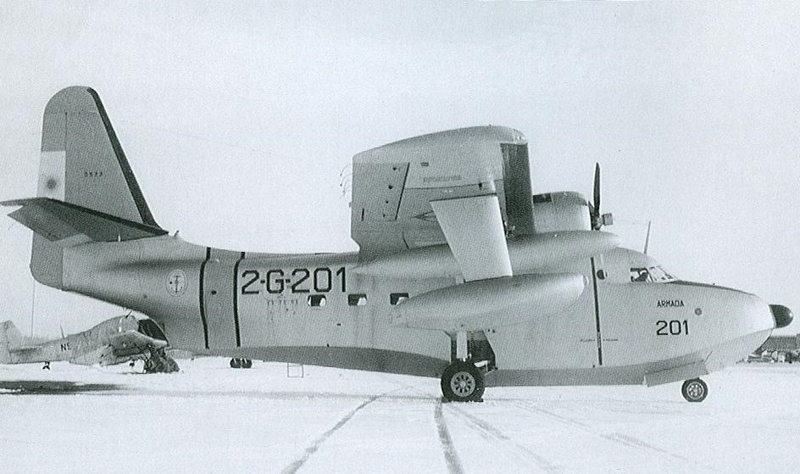
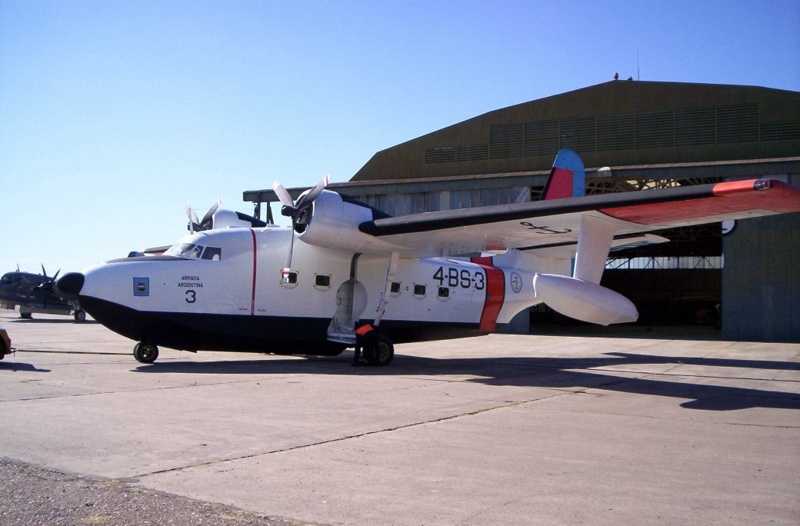
At the end of August 1962, the Argentine Government acquired six (6) Grumman HU-16B Albatros aircraft and assigned three (3) to the Navy and three (3) to the Air Force.
The Navy incorporated them to its Naval Aviation, on April 2, 1963, constituting the Naval Air Search and Rescue Squadron.
They were in active service until 1977 and carried out innumerable maritime control and rescue operations and several missions in the Antarctic continent and the Malvinas Islands.
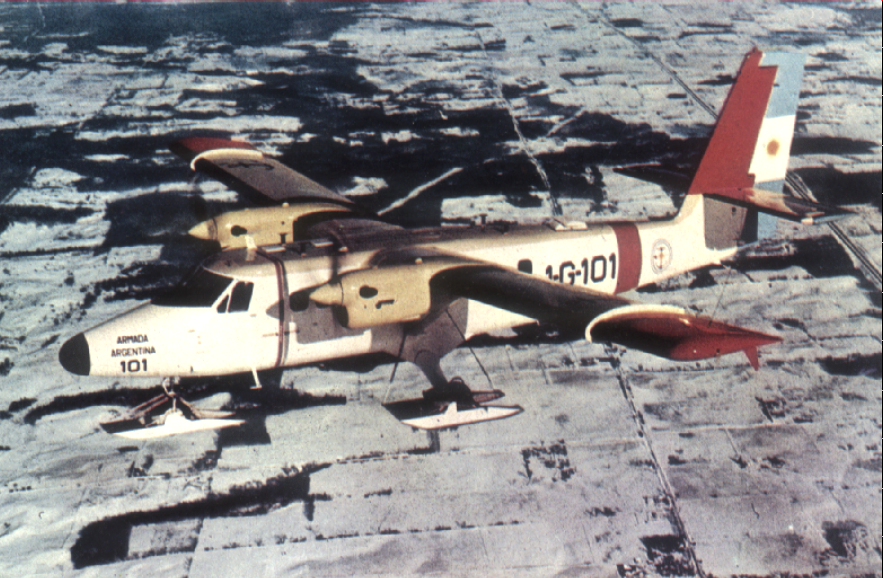
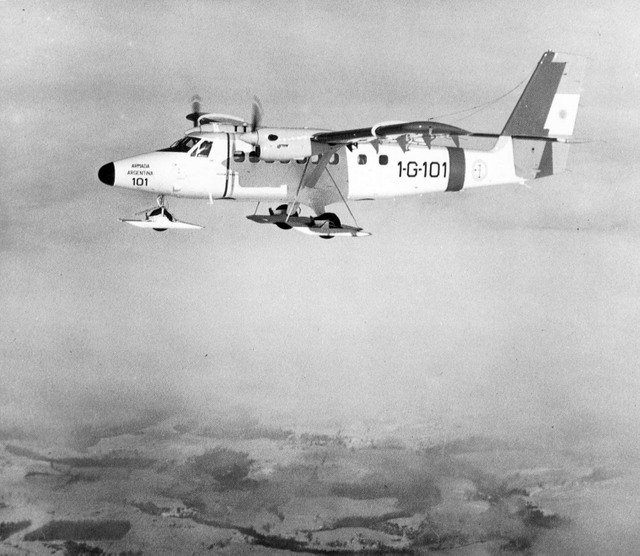
In particular, they supported the crossing to Antarctica of smaller aircraft such as the Twin Otter to the Petrel Air Base in 1969 and 1970. Staying in flight throughout the operation.
In those years four (4) crossings were made. And then in 1971 two (2) crossings to Malvinas in support of an international wildlife rescue operation.
They operated from the Deception Island Naval Base as trifibian aircraft. Land, water and snow.
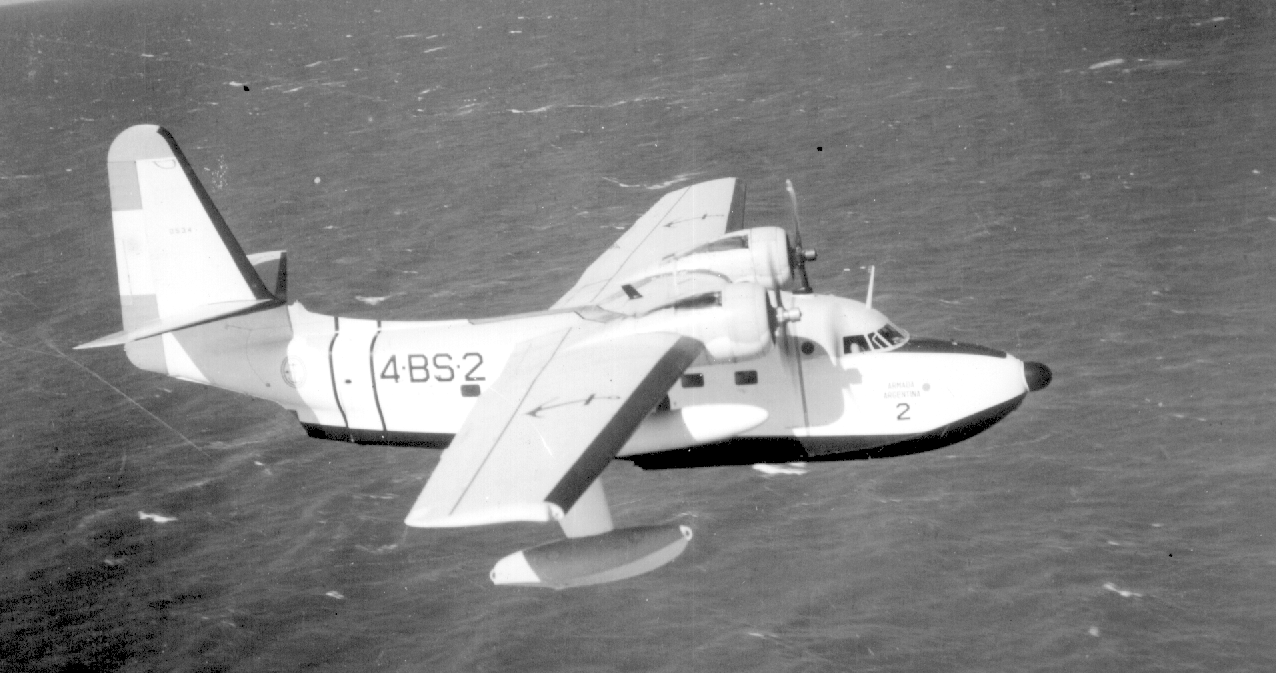
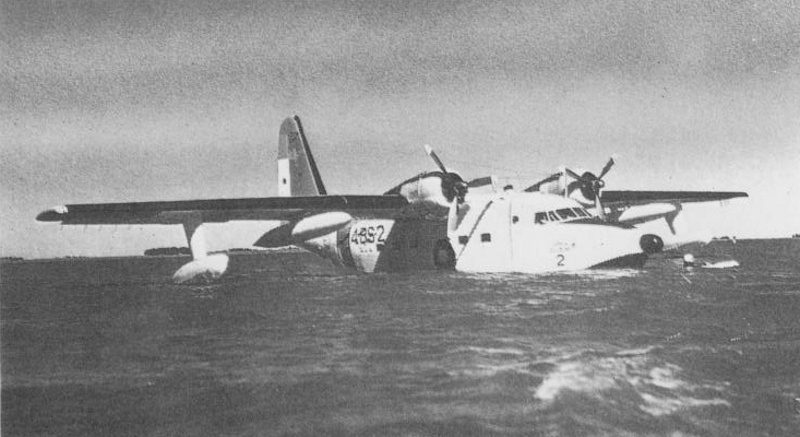
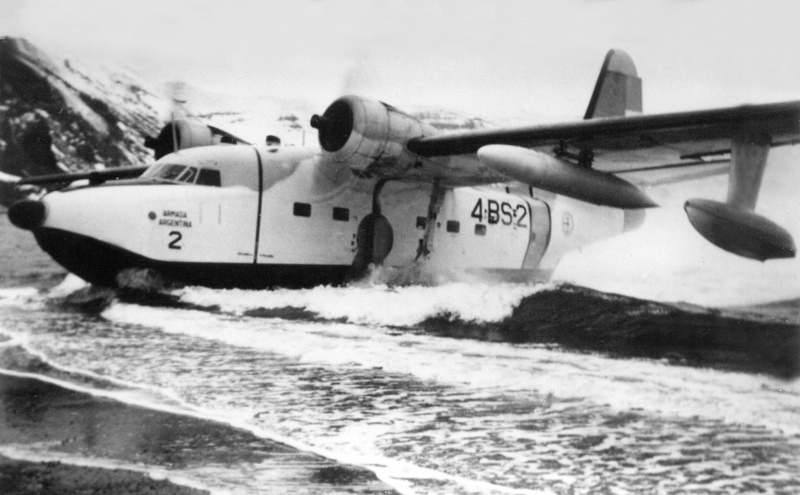
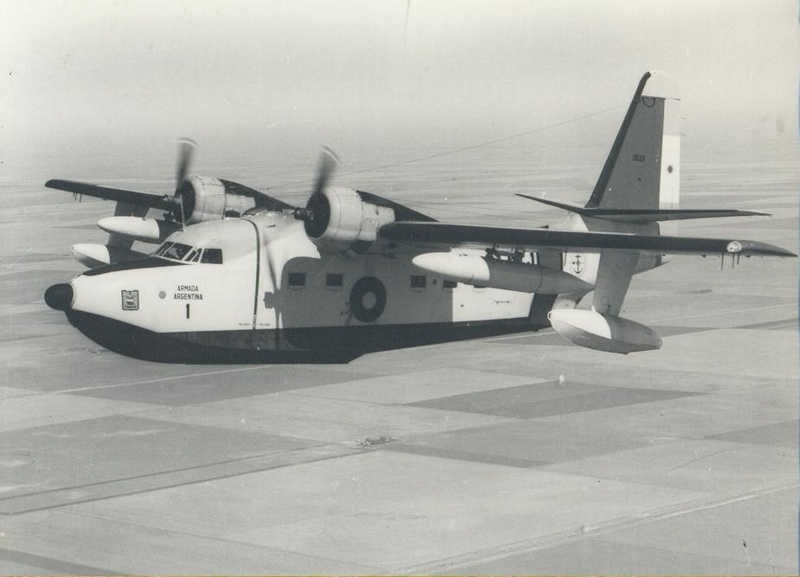
Technical Specifications
MANUFACTURER: The Grumman Aircraft Engineering Corporation
PURPOSE: Reconnaissance, anti-submarine warfare, search and rescue
CREW: 6
DIMENSIONS
WINGSPAN: 24.38 m
LENGTH: 18.5 m
HEIGHT: 7.4 m
WEIGHT: 12,281 kg
PERFORMANCE
MAXIMUM SPEED: 423 km/h
RANGE: 4,300 km
ENROLLMENT: 16 hours at 250 km/h
ENGINE: 2 x Wright R-1820-76A Cyclone engines of 1,425 hp each. Three-bladed, variable-pitch, reversible propellers.
ARMAMENT: None. NUMBER OF DEVICES: 4
CHARACTERISTICS: 2-G-201 to 2-G204, 4-BS-1 to 4-BS-4
PERIOD OF USE: 1960 – 1977